
Why Car Rides Help Kids Talk — And What To Ask When You’re Side By Side
Car rides can make conversation feel easier because they are ordinary, side-by-side, and low-pressure.
By Steve Watts · July 7, 2026
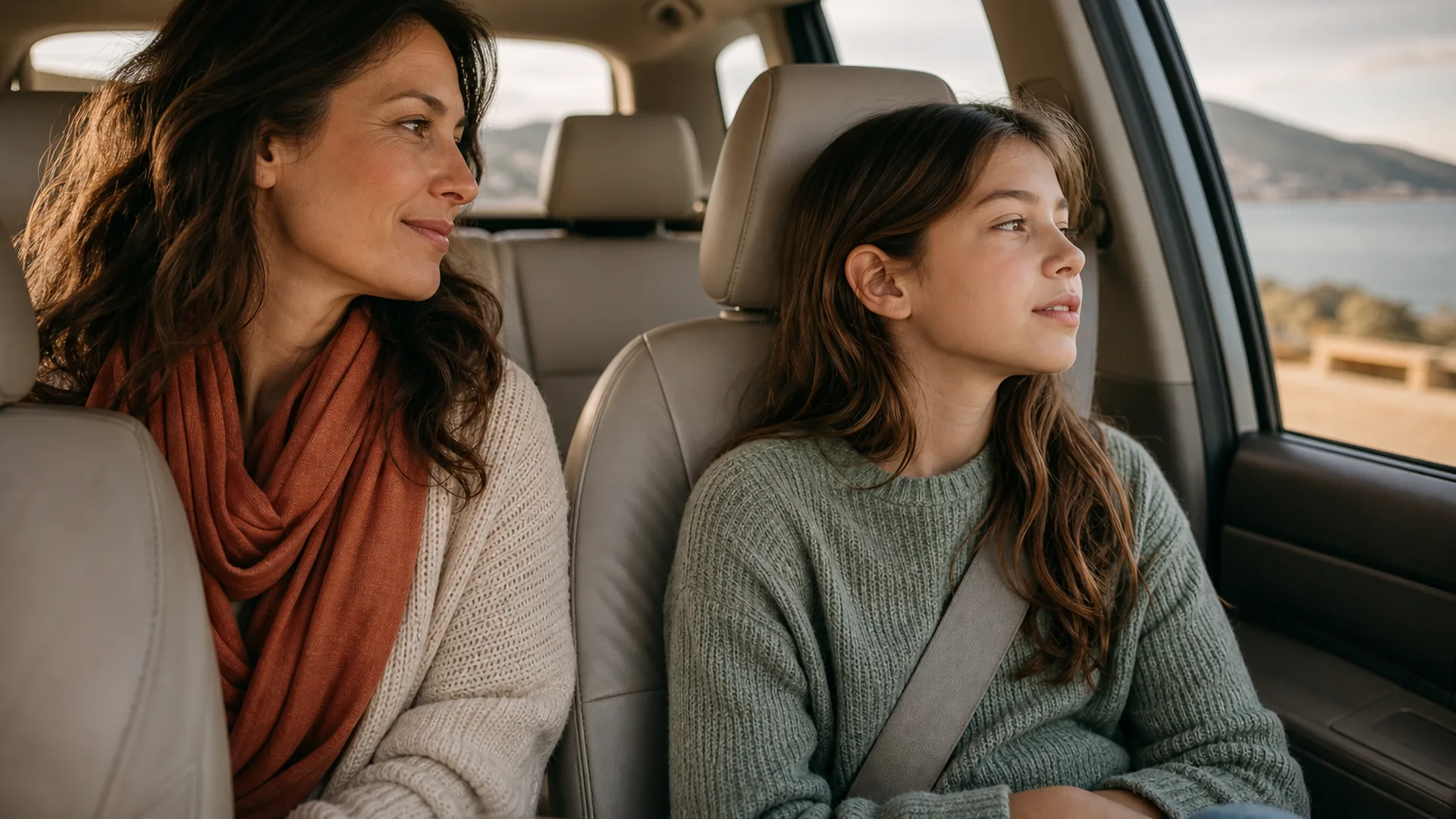
Why kids sometimes talk more in the car
There is a certain kind of conversation that happens better when no one is looking directly at each other.
You are driving.
They are watching out the window.
The radio is low.
There is no table between you.
No big “we need to talk” energy.
No one has to fill every silence.
And then, out of nowhere, your child says something real.
Something about school.
Something about a friend.
Something funny.
Something unfair.
Something they might not have said if you were sitting face-to-face at the kitchen table asking, “So, how are things?”
That is the quiet magic of the car.
Car rides help some kids talk because they remove pressure. The conversation can come in sideways. Your child can answer, pause, look out the window, change the subject, and come back later. It does not have to become a big emotional performance.
And for many kids, that is exactly what makes talking feel safer.
The car is not magic. It is just low-pressure.
A car ride does not automatically make a child open up.
Some kids are quiet in the car. Some are tired. Some want music. Some want to stare out the window and do absolutely nothing. That is normal.
The car works best when parents treat it as a doorway, not an interrogation room.
What makes it useful is the setting:
- You are side by side.
- Eye contact is optional.
- The conversation has a natural beginning and end.
- Silence is less awkward.
- Your child has something else to look at.
- You are already together, so the moment does not feel forced.
That matters because connection often grows through small, repeated back-and-forth moments.
Your child offers a small signal.
You notice it.
You respond gently.
The conversation stays safe enough to continue.
That is the real opportunity.
Why face-to-face talks can feel too big
When parents are worried, we often go straight for the big talk.
We sit down.
We ask what is wrong.
We lean in.
We watch their face.
We ask follow-up questions.
We try to get to the heart of it.
Sometimes that is needed.
But for a child or teen, a direct conversation can feel intense. Even a loving question can feel like a spotlight.
“Are you okay?”
“What happened?”
“Why didn’t you tell me?”
“Is something going on with your friends?”
“Talk to me.”
Those questions come from care, but they can land as pressure.
In the car, the pressure drops. Your child does not have to manage your facial expression while they talk. They do not have to decide how much eye contact is enough. They do not have to sit in silence after a vulnerable sentence.
They can watch the road, hold a snack, fiddle with a hoodie string, look out the window, and say one small thing.
Sometimes that is all they can do.
And sometimes one small thing is the beginning.
Use the car for invitations, not extraction
This is especially important with older kids and teens.
As children grow, they need more privacy. That does not mean they need less connection. It means connection has to respect their growing sense of independence.
That is why car questions should feel like invitations.
Instead of
“Tell me what’s really going on.”
Try
“Want a real question or a random question?”
Instead of
“Why don’t you ever talk to me anymore?”
Try
“I like getting little pieces of your world when you feel like sharing.”
Instead of
“Who are you texting all the time?”
Try
“Anything interesting happening with your people lately?”
The difference is tone.
One says, “I need access.”
The other says, “I am available.”
Start with the moment, not the problem
A lot of parents use car time to ask about the thing they are worried about.
Grades.
Friend drama.
Attitude.
Practice.
Screens.
Homework.
The thing the child has been avoiding.
Sometimes that conversation has to happen. But if every car ride becomes a mobile check-in meeting, kids learn to brace for it.
Try letting some car rides be about ordinary things.
The song on the radio.
The weird dog in the next car.
The snack they want.
The smell of the soccer bag.
The teacher who always says the same phrase.
The friend who makes everyone laugh.
Ordinary talk is not wasted talk.
It builds the road for harder talk later.
If your child learns that talking to you does not always become advice, correction, or a lesson, they may be more willing to bring you the things that matter.
Good car questions are small
The best car questions are not always deep.
In fact, deep questions can backfire if they arrive too fast.
A good car question is easy to answer. It gives your child a place to start. It does not demand a full emotional report.
Try questions like
- Was today more boring, weird, funny, or annoying?
- What was the loudest part of your day?
- Who made you laugh recently?
- What is something adults keep misunderstanding?
- Was there a tiny win today?
- What song fits your mood right now?
- Would you rather talk, listen to music, or just chill?
That last question counts too.
Sometimes giving your child permission not to talk is what makes you safer to talk to later.
Questions to ask on the way home from school
The ride home from school can be tricky. Your child may be overstimulated, hungry, tired, or socially maxed out.
So instead of jumping into “How was your day?” try starting softer.
First:
“I’m glad to see you.”
Then give them a minute.
Later, try:
After-school car questions
- Do you want a snack question or a school question?
- What was the most normal part of today?
- What part of the day felt longest?
- Did anything make you laugh?
- Was lunch calm or chaotic?
- Who did you sit near?
- Was there any friend drama, or was it a regular day?
- What is one thing you are glad is over?
- What is one thing you hope happens tomorrow?
If they say, “I don’t know,” do not panic.
Try:
“That’s okay. You don’t have to have an answer yet.”
The goal is to make the car feel like a safe place, not a quiz.
Questions to ask after practice, rehearsal, or activities
After activities, kids may be tired in a different way. They may have had a great time, felt left out, messed up, improved, compared themselves to someone else, or had a moment they are still replaying.
After-activity questions
- What part felt good today?
- What part was frustrating?
- Did you feel proud of anything?
- Was the coach, teacher, or director in a good mood?
- Who worked hard today?
- Was there a moment you wish you could redo?
- Did anything surprise you?
- Do you want feedback, encouragement, or just music?
That last one is gold.
A lot of kids do not want analysis right after a performance, game, or practice. They want to come down from the moment first.
You can still talk later.
Questions for tweens and teens in the car
Tweens and teens often open up when the question does not feel childish and the parent does not push too hard.
Try questions that respect their world:
Questions for tweens and teens
- What is something people your age care about that adults don’t get?
- What is something that feels different this year?
- Who is easy to be around lately?
- Who is harder to be around?
- What is something that feels overrated right now?
- What is something adults make too big of a deal about?
- What is one thing you wish teachers understood?
- What is one thing you wish parents understood?
- Do you want me to ask a follow-up, or leave it there?
For older kids, that final question can protect the conversation.
It tells them, “I am interested, but I am not going to take over.”
Funny car questions that still build connection
Not every conversation has to be emotional to matter.
Playful questions build connection too. They give you shared language. They make the car feel lighter. They help your child experience you as someone they can enjoy, not just someone who checks on them.
Playful car questions
- If our car had a personality, what would it be?
- What is the most suspicious-looking snack?
- If your backpack could talk, what would it complain about?
- What song should never be played again?
- If today had a smell, what would it be?
- What is the weirdest thing someone said this week?
- Would you rather ride in silence or listen to the worst song ever?
- What should our fake family motto be?
Silly questions are not filler. They are little bids for connection.
And sometimes, after a silly answer, a real one follows.
What to do when your child gives one-word answers
If your child answers with “fine,” “nothing,” “good,” or “I don’t know,” resist the urge to keep digging.
More questions can make the car feel smaller.
Try responding with warmth instead:
“Fair enough.”
“You don’t have to talk right now.”
“I’m here if anything comes back to you later.”
“Want music?”
That may feel like giving up, but it is not.
You are teaching your child that silence is allowed with you. And when silence is allowed, talking can become less risky.
What not to do in the car
The car can be a wonderful place for conversation, but it can also become a trap if a child feels cornered.
Try not to use car rides to:
- Lecture for the whole drive
- Bring up every serious topic
- Ask question after question
- Demand eye contact from the back seat
- Punish honesty
- Share private things your child told you
- Force a child to talk because they cannot leave
- Use the drive as your only relationship check-in
- Scroll for prompts while actively driving
That last one matters.
If you use conversation prompts, choose them before the drive, while parked, or from memory. Safety comes first. The best prompt in the world is not worth distracted driving.
A simple car ride rhythm
You do not need a long list every time.
Try this rhythm:
1. Start with warmth
“I’m glad you’re here.”
2. Offer a choice
“Want a question, music, or quiet?”
3. Ask one small question
“What was one tiny part of today?”
4. Reflect before you respond
“That sounds annoying.”
“I can see why that was funny.”
5. Leave the door open
“Thanks for telling me that piece.”
That is enough.
A good car conversation does not need a big ending. It just needs to leave your child feeling like talking to you was okay.
Car questions by mood
If your child seems tired
- Quiet ride or question ride?
- Was today draining or just normal?
- What kind of snack would fix 10% of today?
- Do you want to talk now or later?
- Want me to just be nearby?
If your child seems annoyed
- Do you want to vent or be distracted?
- Was it a people problem, a school problem, or a tired problem?
- Did something feel unfair?
- Do you want advice or just backup?
- What would make the next hour easier?
If your child seems happy
- What was the best part?
- Who was fun today?
- What made you laugh?
- What do you hope happens again?
- What should I remember about this?
If your child seems worried
- Is it a small worry, medium worry, or big worry?
- Do you want to say it out loud or keep it private for now?
- Is there anything you want help thinking through?
- Do you want comfort, ideas, or quiet?
- Would it help to talk after we get home?
Why small prompts work
Parents do not need perfect words. They need a way into the moment.
A small, well-timed question can help because it gives the parent something better than a default “How was your day?” and gives the child a smaller doorway into the conversation.
The point is not to use a script forever.
The point is to make the first step easier.
Sometimes one gentle prompt is enough to help a parent slow down, ask better, and listen longer.
The best car conversation might be short
Sometimes the whole conversation is:
“Anything interesting happen today?”
“Not really.”
“Okay. Glad you’re here.”
And then ten minutes later:
“Actually, something weird happened at lunch.”
That counts.
Or maybe they never circle back.
That counts too.
Because the point is not to make every drive meaningful. The point is to make connection available.
Again and again.
Without pressure.
Without panic.
Without turning every silence into a problem.
Use the car as a doorway
The car is not where every deep conversation will happen.
It is just one place where your child may feel a little less watched, a little less pressured, and a little more free to say one small true thing.
Let that be enough.
Ask one question.
Let there be quiet.
Keep your reaction gentle.
Stay available.
Over time, those ordinary drives can become something more than transportation.
They can become a place your child learns:
I can say a little.
I can be quiet.
I can come back later.
My parent is still here.
And sometimes, that is exactly how kids begin to open up.
FAQ
Some kids talk more in the car because the setting feels less pressured. They do not have to sit face-to-face, make eye contact, or answer a big question on the spot. The movement, natural pauses, and side-by-side setup can make conversation feel easier.
Related Reading

How to help your child open up
When your child stays closed off, the next question matters. Learn gentler ways to invite more than a shrug.
Read nextQuestions to ask your child
A practical set of everyday questions for knowing your child’s world a little better—one small prompt at a time.
Read next
Why Kids Give One-Word Answers — And What To Ask Instead
“Fine” is often the easiest answer to a question that feels too big. Learn what to ask instead when broad check-ins keep falling flat.
Read next
After-school questions for kids
After school is rarely the moment for a full report. Start with reconnection prompts that respect tired, hungry, overstimulated kids.
Read next
Why Kids Open Up At Bedtime
When the day finally slows down, kids often have more to say. Use bedtime wisely—with gentle prompts that protect sleep and connection.
Read next
How To Build Trust With Your Child One Small Conversation At A Time
Trust is built in tiny everyday moments. Learn the small responses that make kids feel safe enough to tell you more next time.
Read nextHow to get your teenager to talk
Talk with your teen like the almost-adult they are becoming. Find respectful questions that leave room for a real answer—or a pass.
Read next