
Ask One Question For Everyone
Choose one question and let each person answer if they want to. Keep it simple.
Dinner does not have to become a perfect family ritual to matter. Some nights are noisy, rushed, messy, or interrupted. But even one good question can help everyone slow down, share a little more, and feel more connected around the table.
Ask one question. Let everyone answer in their own way.
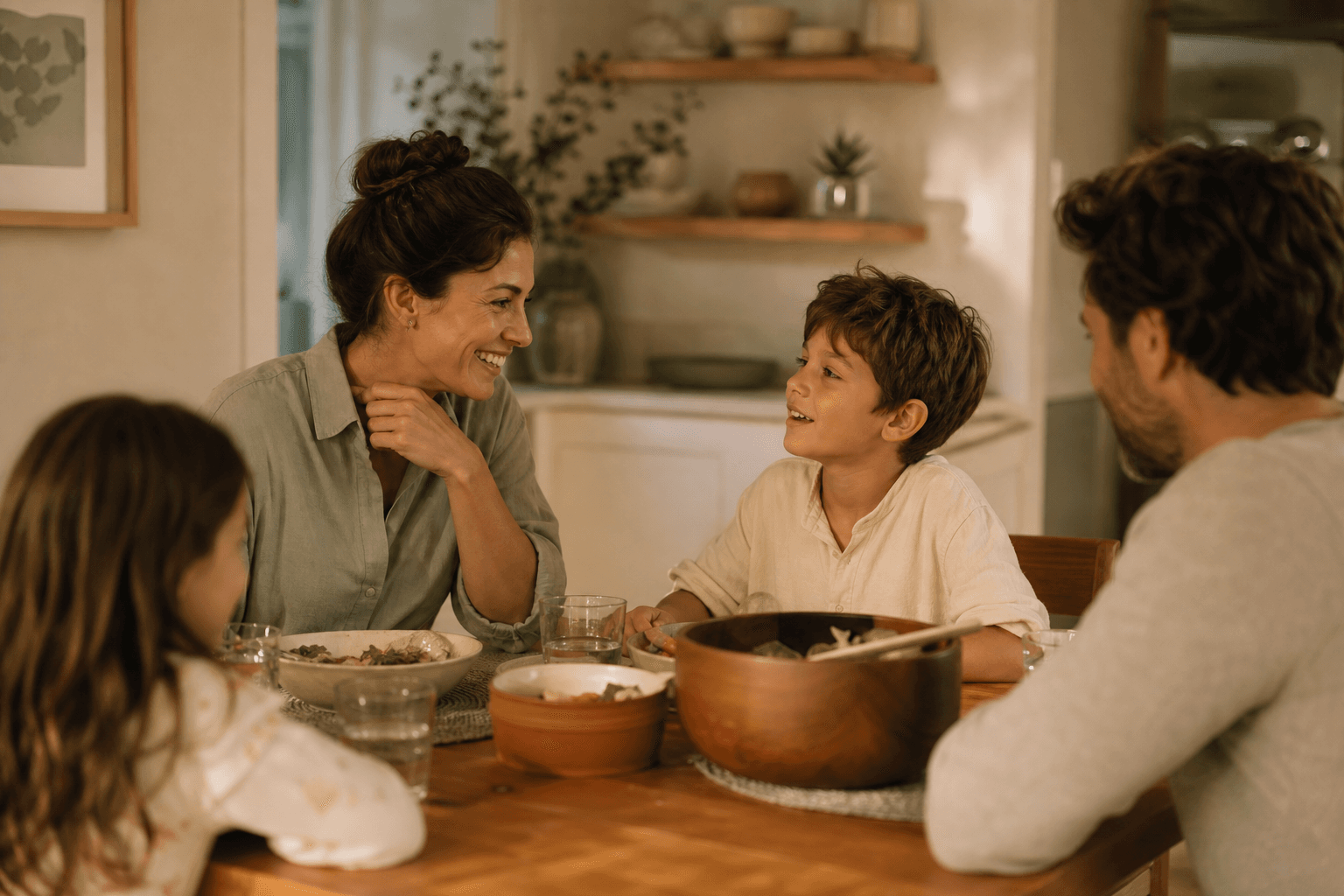
Family dinner gives everyone a small chance to come back together after separate days. It does not need to be formal or deep every night. The best dinner questions are easy enough for tired kids to answer, interesting enough to invite real stories, and flexible enough for the whole family to join.
Some nights, the conversation will be funny. Some nights, it will be quiet. Some nights, one small answer will tell you something important about your child’s world.
“A good dinner question gives the whole family a place to begin.”
A dinner question should make the table feel warmer, not more pressured.
Choose one question and let each person answer if they want to. Keep it simple.
Giving kids permission to pass can make them more willing to join in later.
If someone shares something interesting, stay curious. The follow-up is often where the connection happens.
Choose one that fits the mood at the table. You do not need a long list to have a good conversation.
Simple questions for starting lightly around the table.
Question
“What was one tiny good thing about today?”
Question
“What made you laugh recently?”
Question
“What was the easiest part of your day?”
Question
“What is one thing you are glad is over?”
Question
“What was something interesting you noticed today?”
Question
“What made today feel different from yesterday?”
Question
“What are you looking forward to right now?”
Question
“What would make tomorrow a little better?”
More specific prompts that help kids share real moments.
Question
“What part of the day went by fastest?”
Question
“What happened today that you wish we could have seen?”
Question
“What was one good thing and one hard thing?”
Question
“Was there a moment today that surprised you?”
Question
“Who did you spend the most time with today?”
Question
“What is something you are still thinking about?”
Question
“What was something that felt easier than expected?”
Question
“What was something that felt harder than expected?”
Playful prompts that make the table feel lighter.
Question
“If today had a silly title, what would it be?”
Question
“If your mood was a food, what food would it be?”
Question
“What would be the worst dinner topping ever invented?”
Question
“If our family had a theme song tonight, what would it be?”
Question
“If the pet or a stuffed animal could join dinner, what would they say?”
Question
“What is the funniest thing that happened this week?”
Question
“If you could rename one vegetable, what would you call it?”
Question
“What food should become famous?”
Questions that help everyone feel known and included.
Question
“What is something you want us to do together soon?”
Question
“What is one family moment you liked recently?”
Question
“What do you wish we had more time for?”
Question
“What is something small someone did that helped you today?”
Question
“When did you feel most like yourself today?”
Question
“What made you feel loved today?”
Question
“What is something you want us to remember about this week?”
Question
“What is one way we could make tomorrow feel better as a family?”
Gentle prompts for sharing feelings without making the table too heavy.
Question
“What feeling showed up the most today?”
Question
“Did anything feel unfair, confusing, exciting, or frustrating?”
Question
“Was there a moment today when you wanted someone to understand you better?”
Question
“What do you need more of tonight: comfort, quiet, fun, help, or listening?”
Question
“Did anything feel bigger on the inside than it looked on the outside?”
Question
“Is there anything you want to leave behind before tomorrow?”
Question
“What would make the rest of tonight feel easier?”
Question
“Do you want ideas, comfort, or just listening?”
Use these when the table feels calm and your child seems open to something more thoughtful.
Question
“What is something you care about more than people realize?”
Question
“What is something you wish grown-ups understood better?”
Question
“What is something you have been thinking about lately?”
Question
“What do you wish people asked you more often?”
Question
“What is something that made you proud this week?”
Question
“What is something that has been taking up space in your brain?”
Question
“When do you feel most like yourself?”
Question
“What is one thing you want more of in our family?”
The same dinner question will not work for every age. Keep the table warm, but adjust the wording.
Simple, playful questions help little kids join the conversation without pressure.
“What made you giggle today?”
View age prompts →Specific questions about moments, friends, and feelings help school-age kids share more than “good.”
“What happened today that you wish I could have seen?”
View age prompts →Low-pressure dinner questions help tweens talk without feeling like the spotlight is too bright.
“What is something people do not really understand about your day?”
View age prompts →Respectful questions and permission to pass can help teens stay connected without feeling pushed.
“Do you want a light question or a real question tonight?”
View age prompts →Some dinners are calm. Some are chaotic. Choose the question that fits the energy in the room.
Keep it short and easy. A small answer is enough.
“What is one thing you are glad is over?”
Use the playfulness. Funny questions still build connection.
“If your mood was a food, what food would it be?”
Offer a gentle opening without making them explain everything.
“Do you want comfort, space, help, or distraction tonight?”
Shift toward shared stories or simple appreciation.
“What is one kind thing someone did today?”
Let quiet be okay and ask something small.
“What was one tiny good thing about today?”
Use one quick question instead of trying to create a long conversation.
“What is one word for today?”
Dinner questions work best when they feel like invitations, not spotlights.
Instead of
“Everyone has to answer.”
Try
“You can answer, pass, or think about it for later.”
Instead of
“How was your day?”
Try
“What happened today that you wish we could have seen?”
Instead of
“Why are you being so quiet?”
Try
“Quiet is okay. I’m glad you’re here.”
Instead of
“Tell us what happened.”
Try
“Do you want to share the easy part or the hard part?”
Instead of
“That is not a big deal.”
Try
“It sounds like that stayed with you.”
Instead of
“Stop being silly.”
Try
“Let’s do one silly question and one real question.”
Dinner questions can become a small family rhythm, even if dinner looks different every night.
A light opener can help everyone settle into the meal.
“What was one tiny good thing about today?”
Once everyone has eaten a little, kids may be more ready to talk.
“What was one good thing and one hard thing?”
A slower meal can make room for more playful or thoughtful questions.
“What is something you want us to do together soon?”
A gentle question can help your child feel seen without being put on the spot.
“What would make tonight feel a little easier?”
Dinner can open a thread that continues later when the house is quiet.
“Is there anything from today you want to leave behind before tomorrow?”
Explore Bedtime Questions →Dinner can be a better time to ask if right after school was too much.
“What is something from school you are still thinking about?”
Explore After-School Questions →A dinner question works best when it feels like part of the meal, not a family meeting.
Letting kids pass lowers the pressure and can make them more willing to join next time.
When adults answer honestly and simply, kids learn the rhythm without feeling put on the spot.
Try “What was that like?” or “Tell me more about that” instead of pushing for the whole story.
Not every meaningful family conversation has to be serious. Laughter is connection too.
Sometimes a short phrase helps the table feel safer.
“I’m glad we’re all here.”
“You can answer or pass.”
“Let’s start with one easy question.”
“I like hearing little pieces of everyone’s day.”
“We can do a silly question first.”
“You do not have to tell the whole story.”
“That sounds like it mattered to you.”
“I’m glad you shared that.”
Talk With My Kids helps you choose a few thoughtful prompts based on your child’s age, the moment you’re in, and the kind of conversation you want to start.
Read a few prompts before dinner, then put your phone away and start with one.
Good dinner questions are simple, specific, and easy for the whole family to answer. Try “What was one tiny good thing about today?” or “What happened today that you wish we could have seen?”