
Give Them A Minute
Some kids need food, quiet, movement, or a little space before they can talk about the day.
After school can be one of the hardest times to talk. Your child may be tired, hungry, overstimulated, or already trying to move on from the day. These after-school questions are designed to be more specific than “How was school?” and gentle enough that your child does not feel interviewed the second they walk in the door.
Start small. Snack first if needed. The best answer may come later.
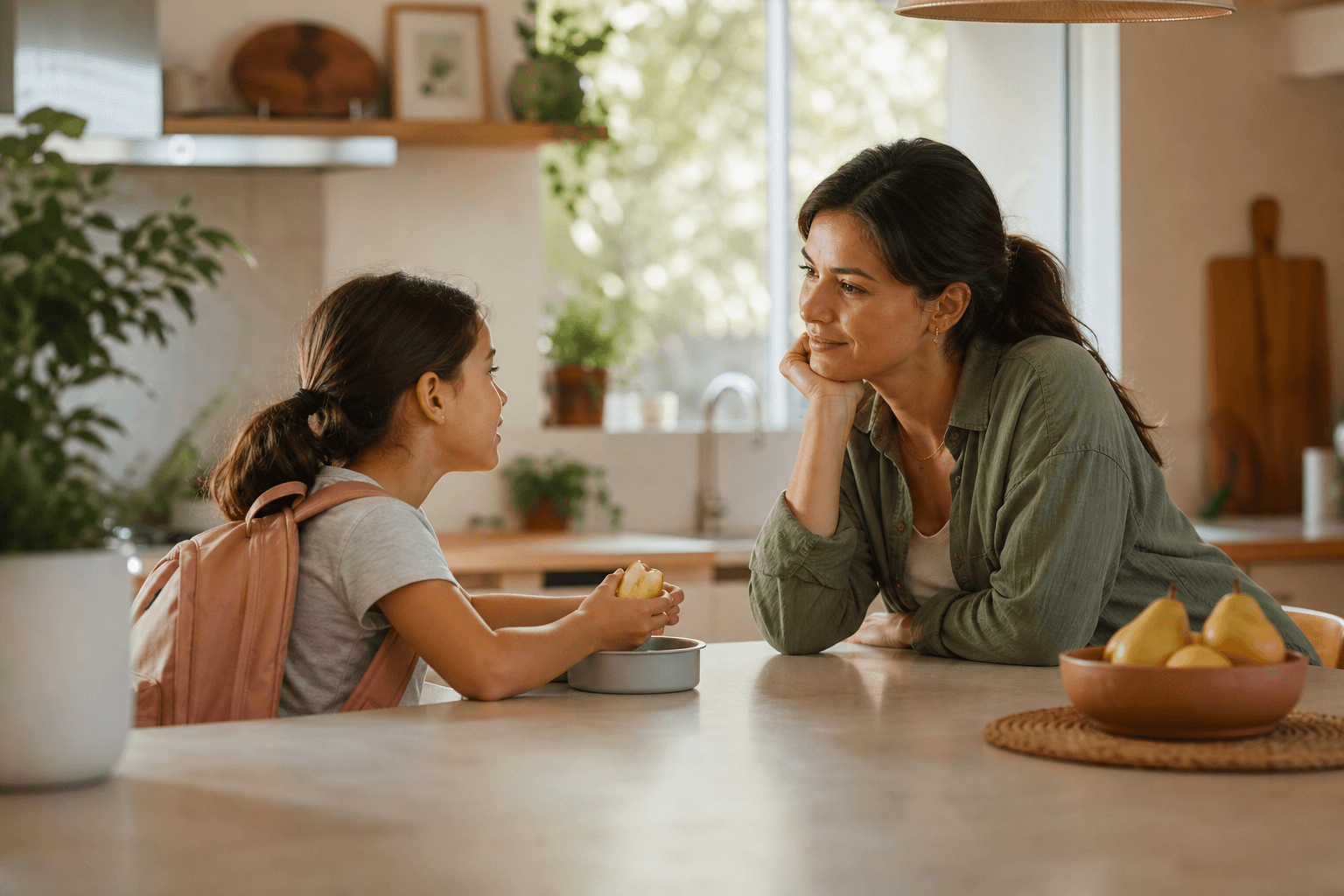
The moment after school can carry a lot. Kids are switching from classroom expectations, friendships, noise, rules, and activity back into home. Some kids want to talk immediately. Some need food. Some need quiet. Some need to move their body before they can explain anything.
That is why broad questions often fall flat. “How was school?” asks your child to summarize an entire day all at once. A better after-school question gives them one small doorway into the day.
“After school, the right question is usually smaller, softer, and more specific.”
A few small choices can help the conversation feel easier instead of forced.
Some kids need food, quiet, movement, or a little space before they can talk about the day.
Instead of asking for the whole day, ask about one moment, one person, one feeling, or one detail.
If they seem chatty, stay curious. If they seem drained, keep the door open and try again later.
Choose one or two that fit the moment. You do not need to ask them all.
Low-pressure questions for the first few minutes after school.
Question
“What part of the day went by fastest?”
Question
“What was one tiny good thing about today?”
Question
“What made you laugh or smile today?”
Question
“What is one thing you are glad is over?”
Question
“What felt easy today?”
Question
“What felt different today?”
Question
“What snack would your day be if it were a snack?”
Question
“What are you looking forward to now that school is done?”
Specific prompts that help kids remember real moments instead of summarizing the whole day.
Question
“What happened today that you wish I could have seen?”
Question
“Was there a moment today that surprised you?”
Question
“What was one good thing and one hard thing?”
Question
“Who did you spend the most time with today?”
Question
“Did anything happen that you are still thinking about?”
Question
“What would you change if you could replay one part of the day?”
Question
“What was something that felt easier than you expected?”
Question
“What was something that felt harder than you expected?”
Gentle questions for friendships, belonging, awkward moments, and social pressure.
Question
“Who made you laugh today?”
Question
“Was there a moment when you felt included?”
Question
“Was there a moment when you felt left out?”
Question
“Who did you wish you had more time with today?”
Question
“Did anyone surprise you today?”
Question
“Was there anything awkward, funny, or confusing with friends?”
Question
“Did anyone seem like they were having a hard day?”
Question
“What makes someone feel easy to be around right now?”
Questions about class, teachers, and learning that do not feel like a performance review.
Question
“What was something interesting you learned today?”
Question
“Was there a part of class that felt easy?”
Question
“Was there a part of class that felt confusing?”
Question
“Did a teacher say anything that stuck with you?”
Question
“What subject felt best today?”
Question
“What subject felt hardest today?”
Question
“Did you ask a question or help someone today?”
Question
“What do you wish school had more of?”
Supportive prompts for frustration, worry, excitement, disappointment, and overwhelm.
Question
“What feeling showed up the most today?”
Question
“Did anything feel unfair, frustrating, exciting, or confusing?”
Question
“Was there a moment when you wanted someone to understand you better?”
Question
“Did anything feel bigger on the inside than it looked on the outside?”
Question
“What do you need more of right now: food, quiet, movement, comfort, or listening?”
Question
“Is there anything you want to leave at school and not carry into the rest of the day?”
Question
“What would make the rest of today feel a little easier?”
Question
“Do you want help, comfort, space, or just someone to listen?”
Use these when your child says “fine,” “good,” “bad,” or “I don’t know.”
Question
“Tell me one tiny piece.”
Question
“What was the fine part?”
Question
“What was not fine?”
Question
“What happened right before that?”
Question
“Was that a good thing, a hard thing, or both?”
Question
“What was that like for you?”
Question
“Did anyone else notice?”
Question
“Do you want to say more, or should we leave it there for now?”
A preschooler, elementary kid, tween, and teen will not all answer the same question. Keep the question specific, but adjust the wording.
Simple, concrete questions help younger kids remember small moments from the day.
“What made you giggle today?”
View age prompts →Specific questions about people, moments, and feelings often work better than broad questions.
“What happened today that you wish I could have seen?”
View age prompts →Tweens often need questions that feel casual and not too intense.
“What is something people do not understand about your day?”
View age prompts →Teens may need space, respect, and permission not to answer immediately.
“Do you want to talk about today, vent, or just have a quiet ride?”
View age prompts →The best after-school question depends on how your child walks through the door.
Start with food before questions. A snack may do more for the conversation than another prompt.
“Want a snack first, then I’ll ask you one tiny question?”
Keep the question small and avoid asking them to explain the whole day.
“What is one thing you are glad is over?”
Follow the good energy and let them relive the moment.
“What made you smile today?”
Help them name what felt hard before moving into solutions.
“Did anything feel unfair today?”
Let quiet be okay. A calm opening may work better than a direct question.
“Do you want a question, quiet, or a snack first?”
Offer choices and help the transition feel softer.
“Do you need space, movement, food, or a little comfort?”
These small wording shifts can help after-school conversations feel less like an interrogation and more like an invitation.
Instead of
“How was school?”
Try
“What happened today that you wish I could have seen?”
Instead of
“Why are you so quiet?”
Try
“Quiet is okay. Do you want space, a snack, or a question?”
Instead of
“Did you have a good day?”
Try
“What was one good thing and one hard thing?”
Instead of
“You never tell me anything.”
Try
“I like hearing little pieces of your day when you’re ready.”
Instead of
“Tell me what happened.”
Try
“Do you want to start with the easy part or the hard part?”
Instead of
“That does not sound like a big deal.”
Try
“It sounds like that stayed with you.”
Not every child wants to talk the second school ends. Look for the moment that fits your child.
Works best for kids who naturally start talking as soon as they see you.
“What part of the day went by fastest?”
A snack can help the day settle before the conversation begins.
“What was one good thing and one hard thing?”
Side-by-side conversations can feel easier than face-to-face questions.
“Do you want a quiet ride, a funny question, or a real question?”
Explore Car Ride Questions →A small check-in before the next demand can help your child feel seen.
“What do you need before we start the next thing?”
Some kids need time before they can talk about the school day.
“What is something from today you are still thinking about?”
Explore Dinner Questions →For some kids, the school day finally comes out when the house gets quiet.
“Is there anything from today you want to leave behind before tomorrow?”
Explore Bedtime Questions →After-school questions work best when they feel like part of the transition home, not a test.
Ask casually while making a snack, driving, unpacking, or doing something side by side.
A shrug or one-word answer might mean your child needs time, not that they do not want connection.
If they share something hard, try reflecting what you heard before giving advice.
If they open up at dinner or bedtime instead, that still counts. The door stayed open.
Sometimes a short phrase is better than another question.
“I’m happy to see you.”
“You do not have to talk right away.”
“We can start with a snack.”
“I like hearing little pieces of your day.”
“You can tell me the easy part first.”
“If something from school is still on your mind, I’m here.”
“We can talk now or later.”
“I’m glad you’re home.”
Talk With My Kids helps you choose a few thoughtful prompts based on your child’s age, the moment you’re in, and the kind of conversation you want to start.
Read a few prompts before pickup, then put your phone away and start with one.
Good after-school questions are specific and low-pressure. Try questions like “What happened today that you wish I could have seen?” or “What part of the day went by fastest?”